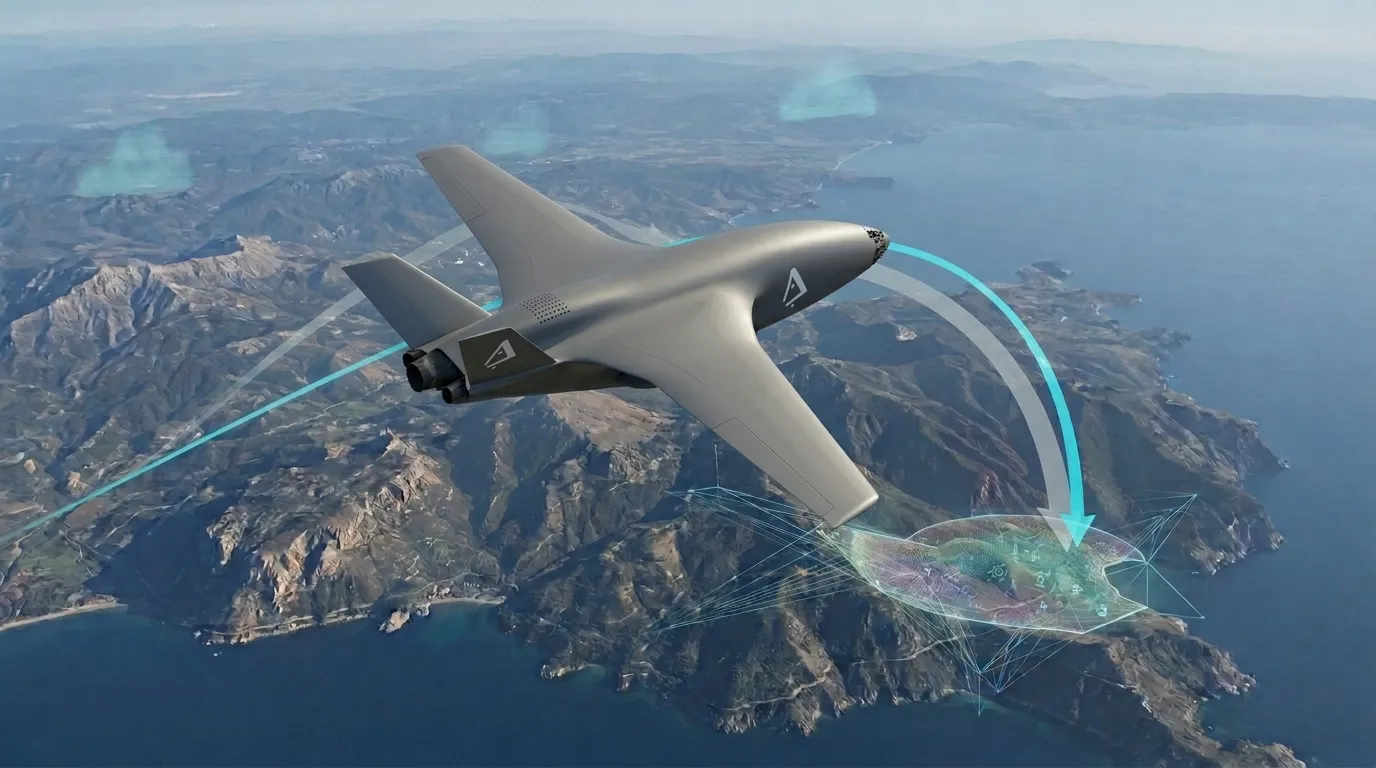
A modern unmanned vehicle usually reacts to external disturbances through a sequential circuit: sensors record a change in state, the data enters the computer, the control algorithm determines the necessary correction, after which the command is transmitted to the actuator. This architecture is necessary for overall flight control, but for very fast local aerodynamic events this path contains several successive stages.
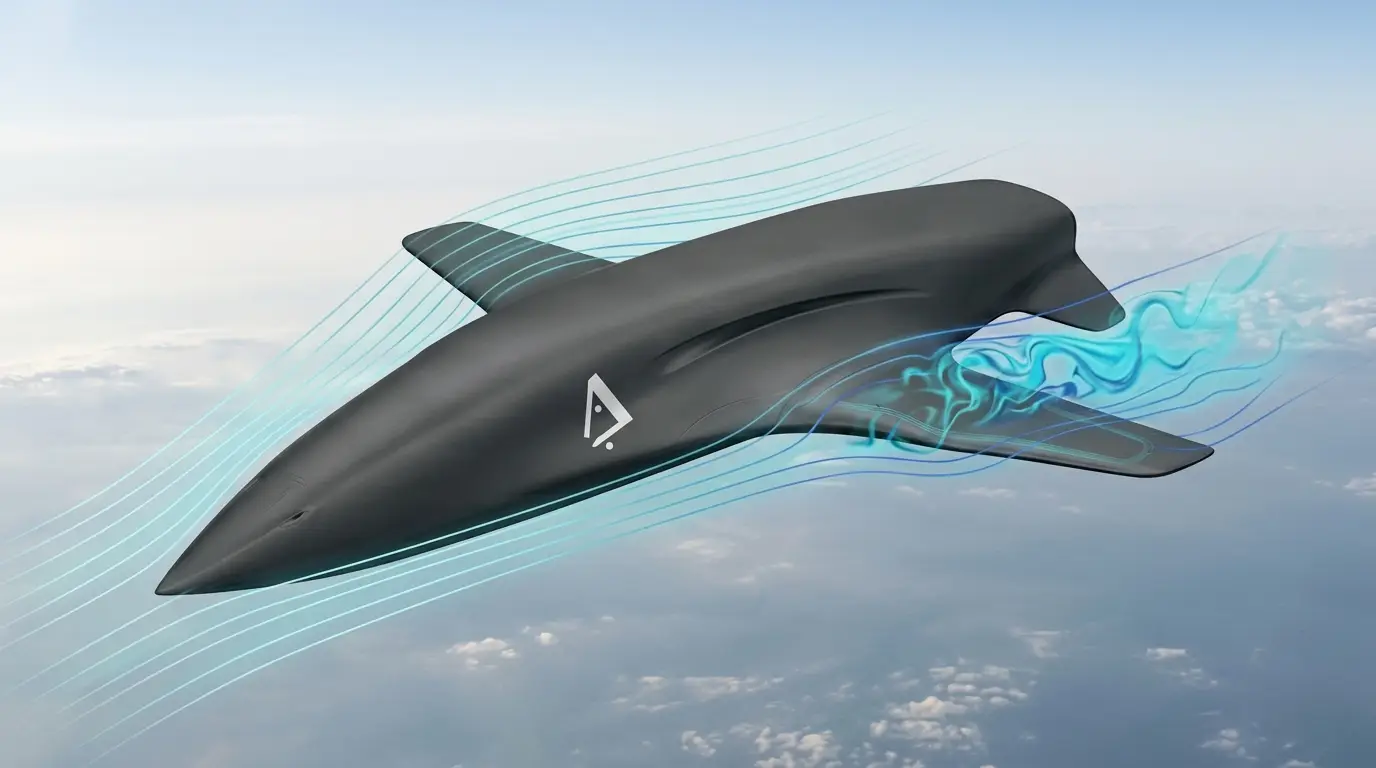
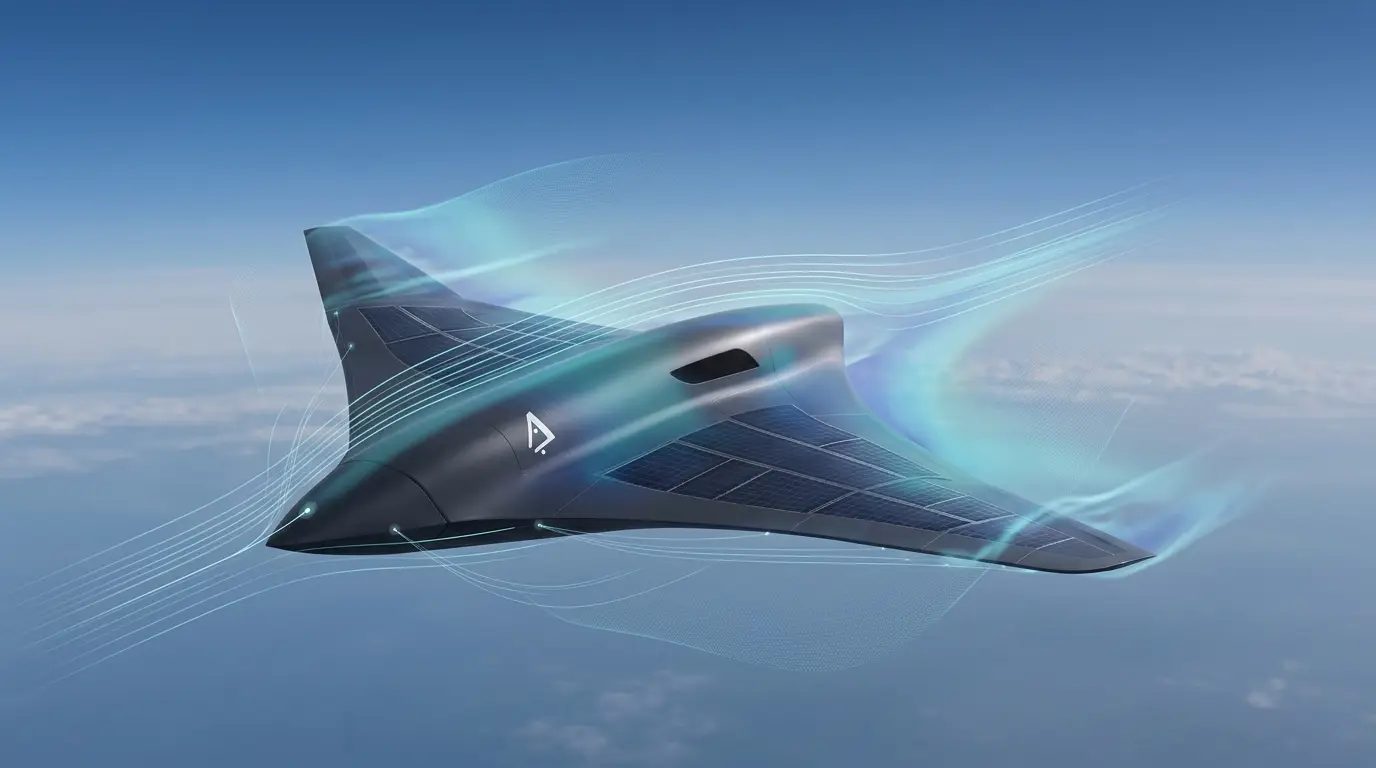
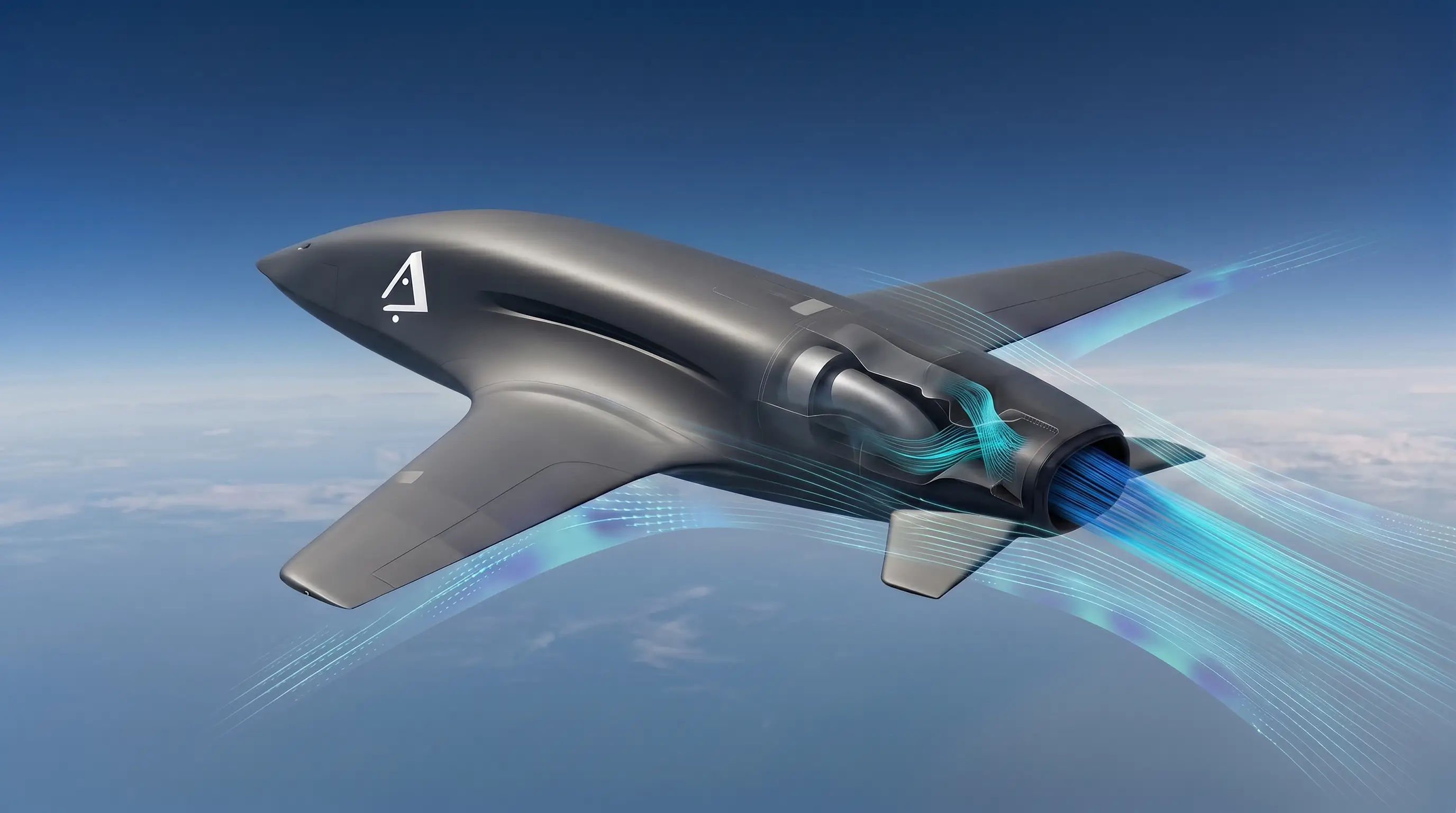
AERIS ARW-1 - Aerodynamic Reflex Wing - explores the possibility of adding a second level of response to the wing. Its task is to ensure that a separate section of the surface can respond to a local change in air flow directly at the location of the disturbance, without waiting for the completion of the full central control cycle.
Why exactly the “aerodynamic reflex”
The term Reflex in the name of the ARW-1 does not refer to the geometry of the reflex wing profile, but to the principle of reaction. An analogy is built with a fast local reflex: an event is detected near the point of impact, the primary reaction is formed there, and the central system continues to be responsible for the general state and further control.
For a wing, such an event can be a rapid change in local pressure that occurs during a gust, asymmetric flow, or other short-term aerodynamic disturbance.
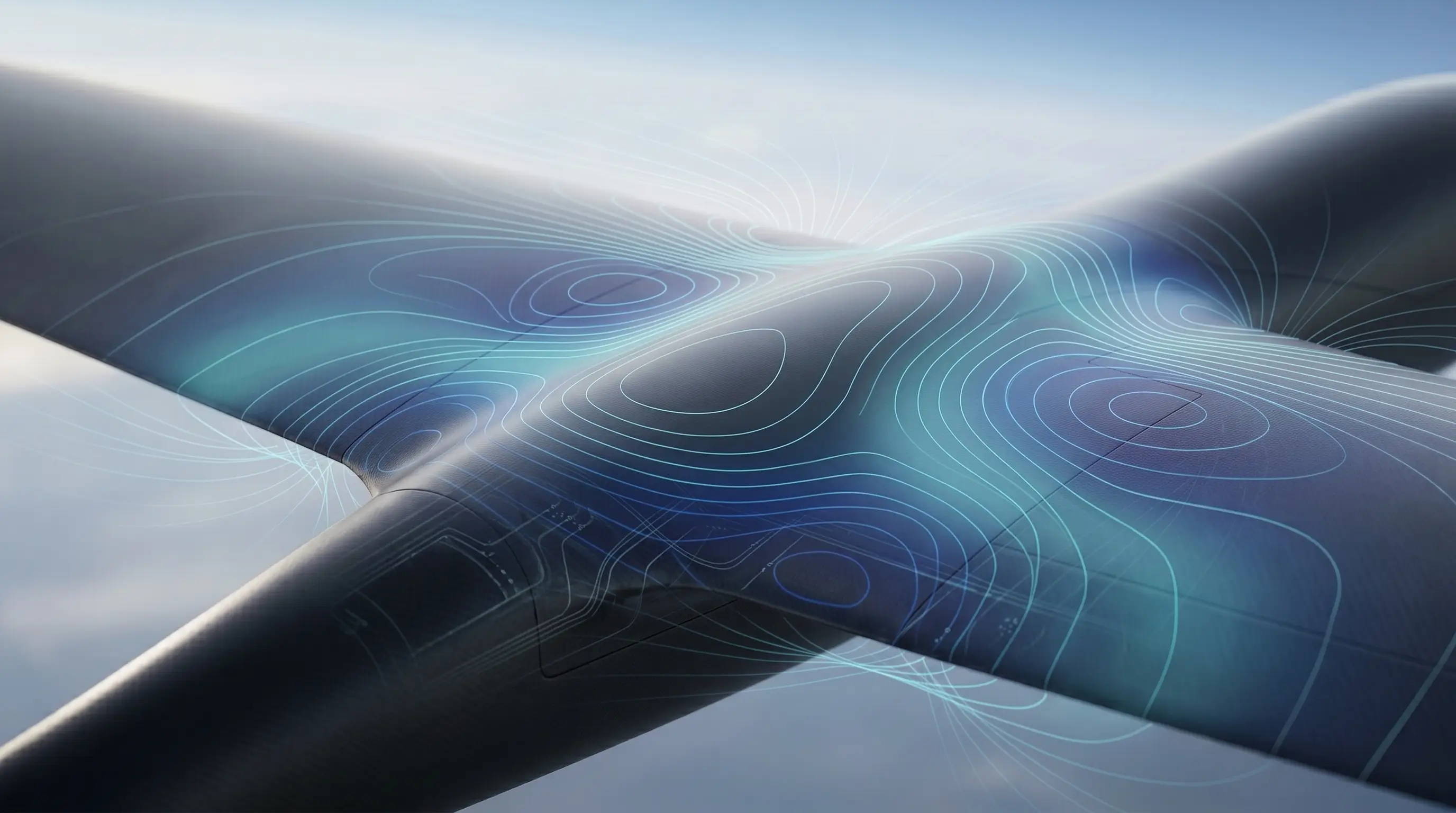
ARW-1 considers pressure distribution not only as a source of measurement information. In certain modes, it can become part of the very logic of the surface reaction.
From pressure measurement to local action
The air flow creates spatially non-uniform pressure on the wing surface. In a stable regime, its distribution changes relatively predictably, and an external disturbance can quickly change the state of a separate area.
In a classical architecture, such a change must first be converted into data and passed down the control loop. The ARW-1 concept explores a different path: using the local aerodynamic state directly as an input to a nearby functional element.
- the change in pressure occurs directly on the surface of the wing;
- the local node recognizes a given ratio of aerodynamic influences;
- the reaction is formed within the corresponding section of the wing;
- the central controller continues to control the overall movement of the machine and slower processes.
Thus, there are fewer necessary intermediate steps between the physical impact of the flow and the initial surface reaction.
Local fluidic logic
One of the research areas of ARW-1 is related to the use of pressure and pressure differences not only for measurement, but also for the formation of the simplest local logic. Instead of transferring the decision making entirely to the electronic computing circuit, part of the cause-and-effect relationship can exist directly within the functional structure of the wing.
This principle allows us to consider a separate section not as a passive surface awaiting an external command, but as a local system with its own input aerodynamic signal and a predetermined nature of the reaction.
In this case, we are not talking about transferring the entire control system inside the wing. ARW-1 is designed to study a limited class of fast reactions for which the physical signature of the perturbation and the required direction of the primary response are known in advance.
Gust as a local event
Atmospheric disturbance does not necessarily affect the entire aircraft equally and simultaneously. One section of the wing may be the first to encounter a change in the vertical or lateral component of the flow, while the rest of the surface is still in a different aerodynamic state.
For centralized control, this means the need to first determine a change in the overall movement of the device or process the readings of the corresponding sensors. ARW-1 explores the possibility of starting a local reaction earlier - directly by changing the state of the wing section itself.
The potential tasks of such an architecture are associated not with the execution of a full-fledged maneuver, but with the primary reaction to a quickly occurring aerodynamic event:
- reduction of short-term load from a gust;
- response to local flow asymmetry;
- suppression of part of the fast transient process;
- reduction of the disturbance amplitude before the main control loop comes into operation.
Two control levels instead of one
The ARW-1 is not considered a replacement for autopilot. The central computer still must determine the state of the aircraft, maintain the trajectory, control restrictions and coordinate the executive systems.
The research idea is to categorize reactions according to their magnitude and nature.
- the local level responds to a limited set of fast aerodynamic events;
- the central level evaluates the state of the apparatus as a whole and determines further management;
- after the initial local reaction, the main circuit can compensate for the remaining deviation;
- in the absence of suitable conditions, the wing should maintain a predictable baseline state.
This separation allows us to explore an architecture in which the speed of the primary reaction does not require increasing the frequency and complexity of all other computing processes on board.
ARW-1 and airflow state estimation
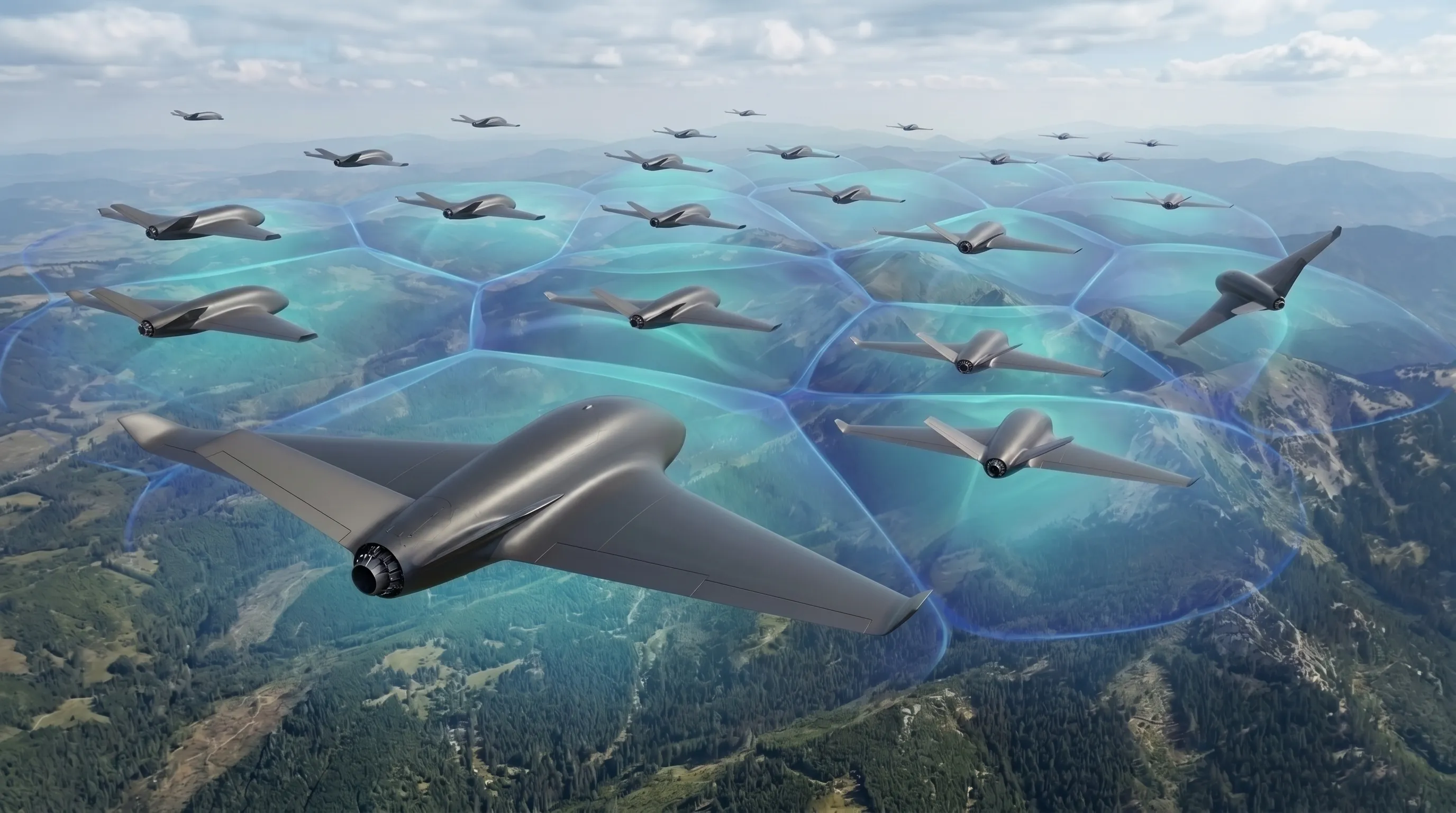
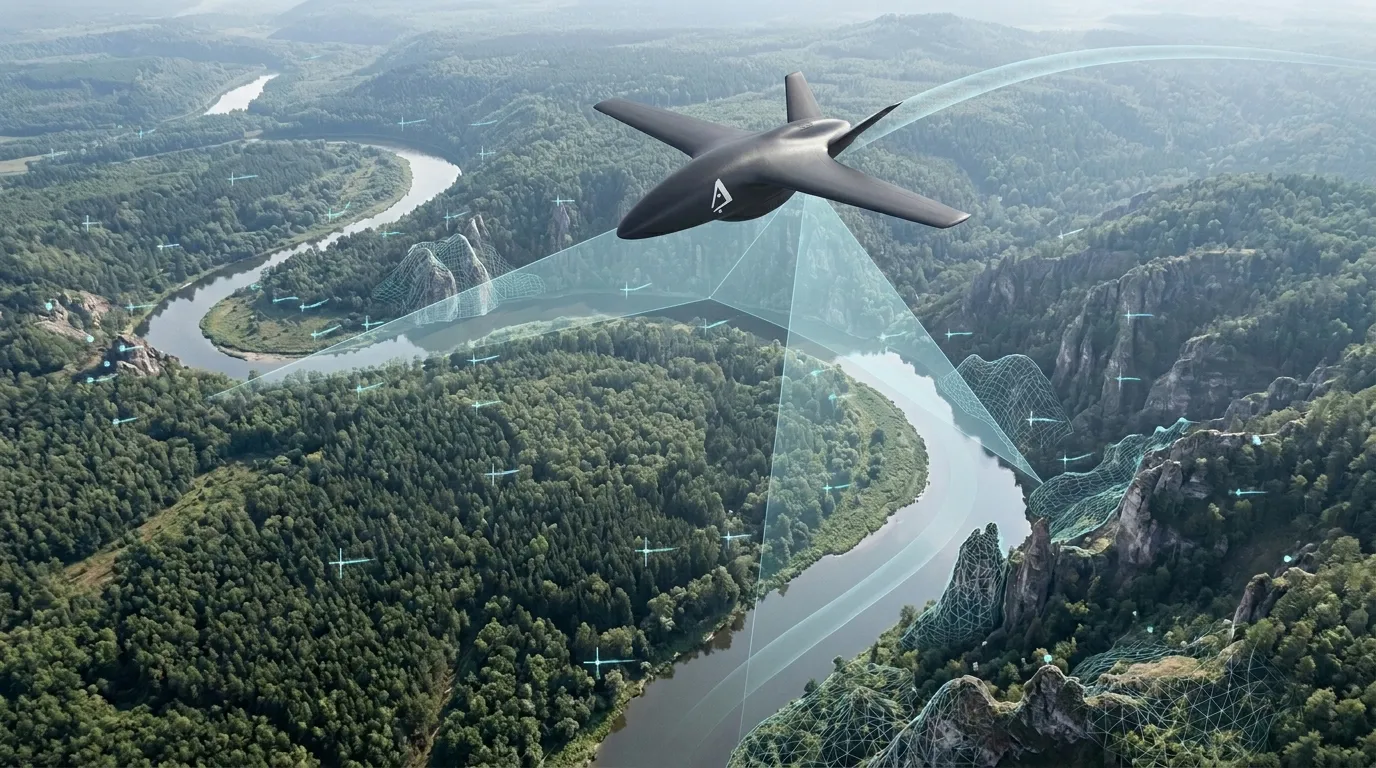
AERIS treats the local response and the reconstruction of the global aerodynamic state as different problems. APT-1 is designed to provide a broader picture of flow from distributed observations, while ARW-1 explores the ability to respond to a single fast event directly where it occurs.
These approaches work with different scales of information. To build a general model, it is important to compare multiple dimensions in time and space. For a local reflex, in contrast, the value may lie in the minimal path from physical disturbance to limited response.
What needs to be tested experimentally
The mere fact of a change in pressure does not mean that the surface should react. The same local signal can occur during a normal maneuver, a change in speed, or an external gust. Therefore, the key task of ARW-1 is to determine the conditions under which local response is truly useful and does not conflict with the overall control of the apparatus.
The experimental program should allow the comparison of the flow state, the local response of the wing and the actual movement of the UAV. Of particular importance is the study of transient regimes, where the duration of the event is short, and the interaction between the local and central circuits becomes most noticeable.
- determination of informative aerodynamic signs of disturbance;
- checking the repeatability of the local reaction;
- assessment of the influence of the reaction on the load and movement of the apparatus;
- study of interaction with the main control loop;
- defining modes in which local response should be limited or disabled.
Limitations and engineering risks
The closer the logic is to the physical process, the less information about the general state of the device is available to it. This is both an advantage and a major limitation of the local approach.
An incorrectly selected criterion can cause the system to react to a normal mode change as if it were an external disturbance. Too high sensitivity can lead to unnecessary reactions, and insufficient sensitivity can make the system useless precisely in those fast processes for which it is created.
- a local change in pressure must be distinguished from a normal maneuver;
- the reaction of one section should not create an undesirable effect on neighboring areas;
- the behavior of the system must remain predictable when a local element fails;
- central control must maintain priority over the general movement of the apparatus;
- the effect must be confirmed in real unsteady air flow.
The AERIS approach
AERIS ARW-1 explores the boundary between a passive airfoil and a surface capable of independently performing a limited physical response to ambient flow conditions.
The goal of the project is not to create a wing that makes all decisions without a computer. The task is much more specific: to determine whether it is possible to transfer some of the fastest and most unambiguous aerodynamic reactions closer to the place where the disturbance itself occurs.
If such a principle proves effective in experiment, the wing can be considered not only as an executor of commands from the control system, but also as a functional structure with its own local level of response to the air flow.
AERIS ARW-1 is at the research and experimental testing stage. The main objective of the program is to determine the range of modes in which the aerodynamic reflex is capable of producing a measurable result without losing the predictability and stability of the overall control system.