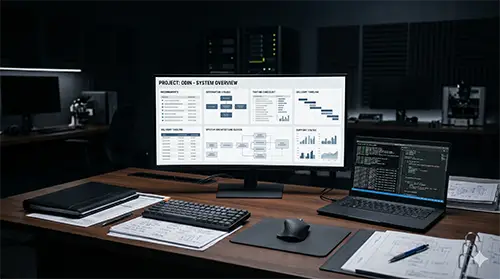
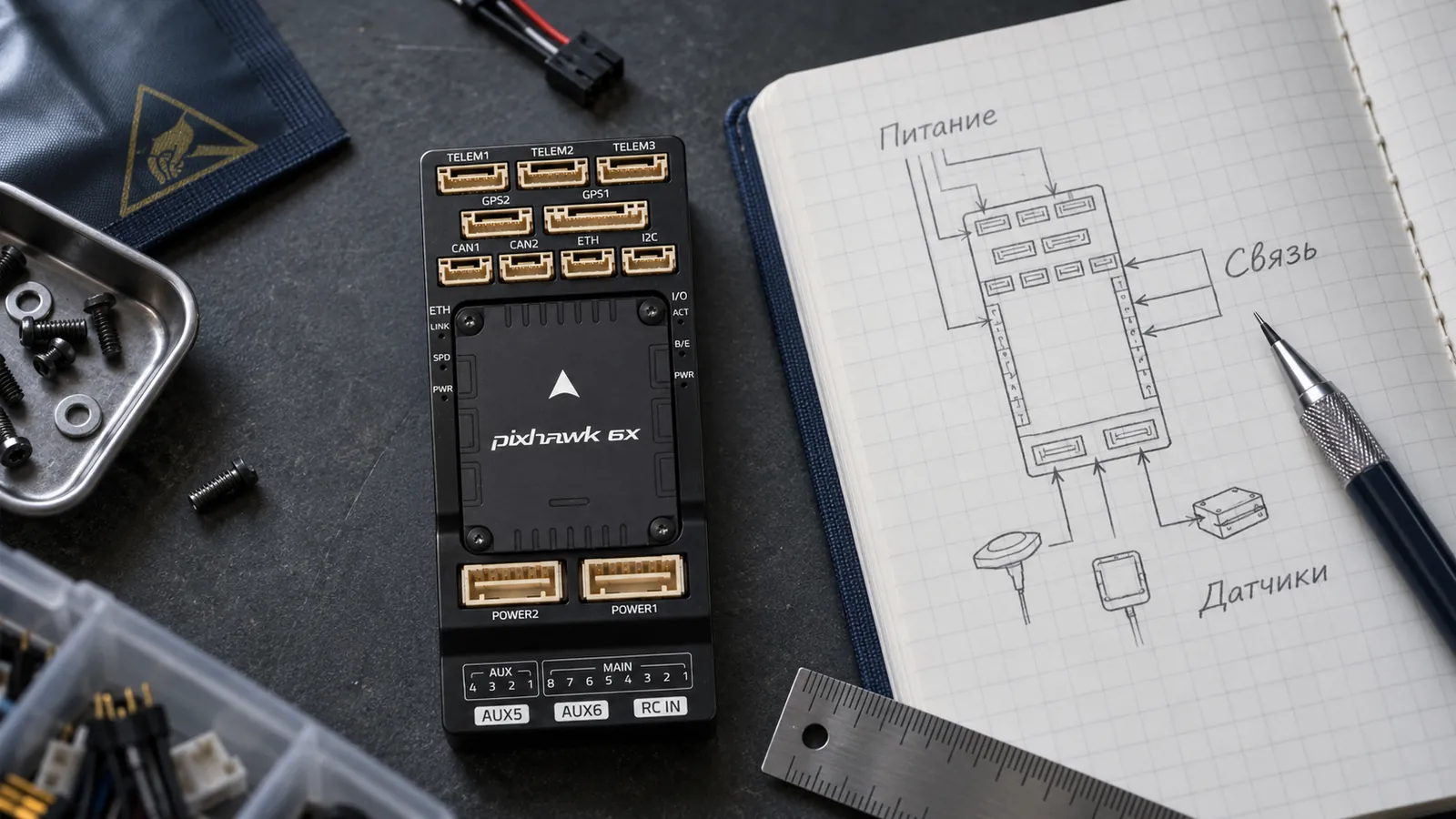
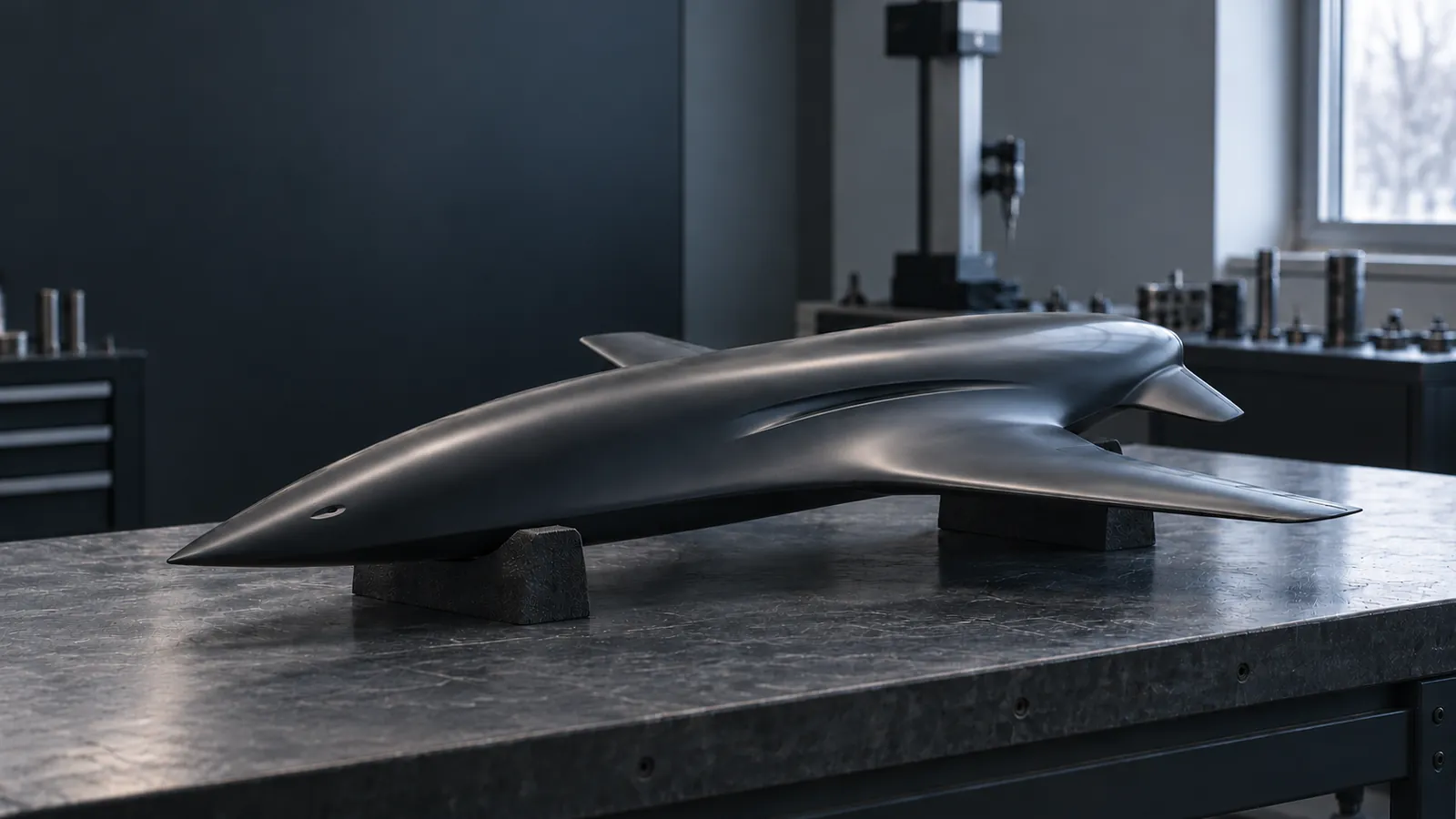
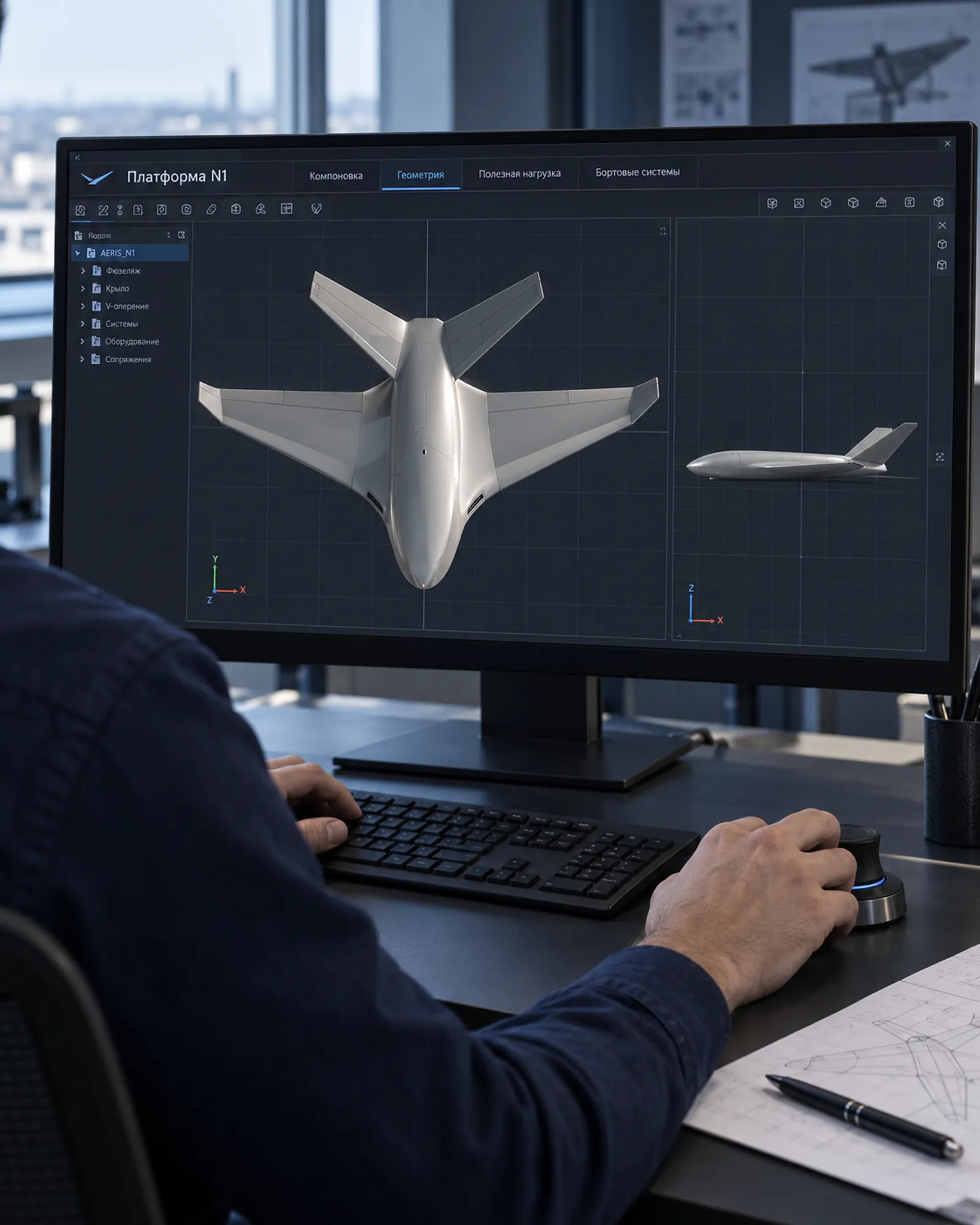
AERIS develops its own unmanned aircraft platforms for missions where the characteristics of available off-the-shelf systems limit the design's capabilities. Each platform is built around a specific mission class, operating environment, and technology architecture.
AERIS's proprietary UAS integrates airframe, propulsion, onboard computing, sensor systems, communications and software into a coherent design. The configuration of a particular device is determined by its purpose, payload, required autonomy and operating conditions.
A proprietary platform as the system foundation
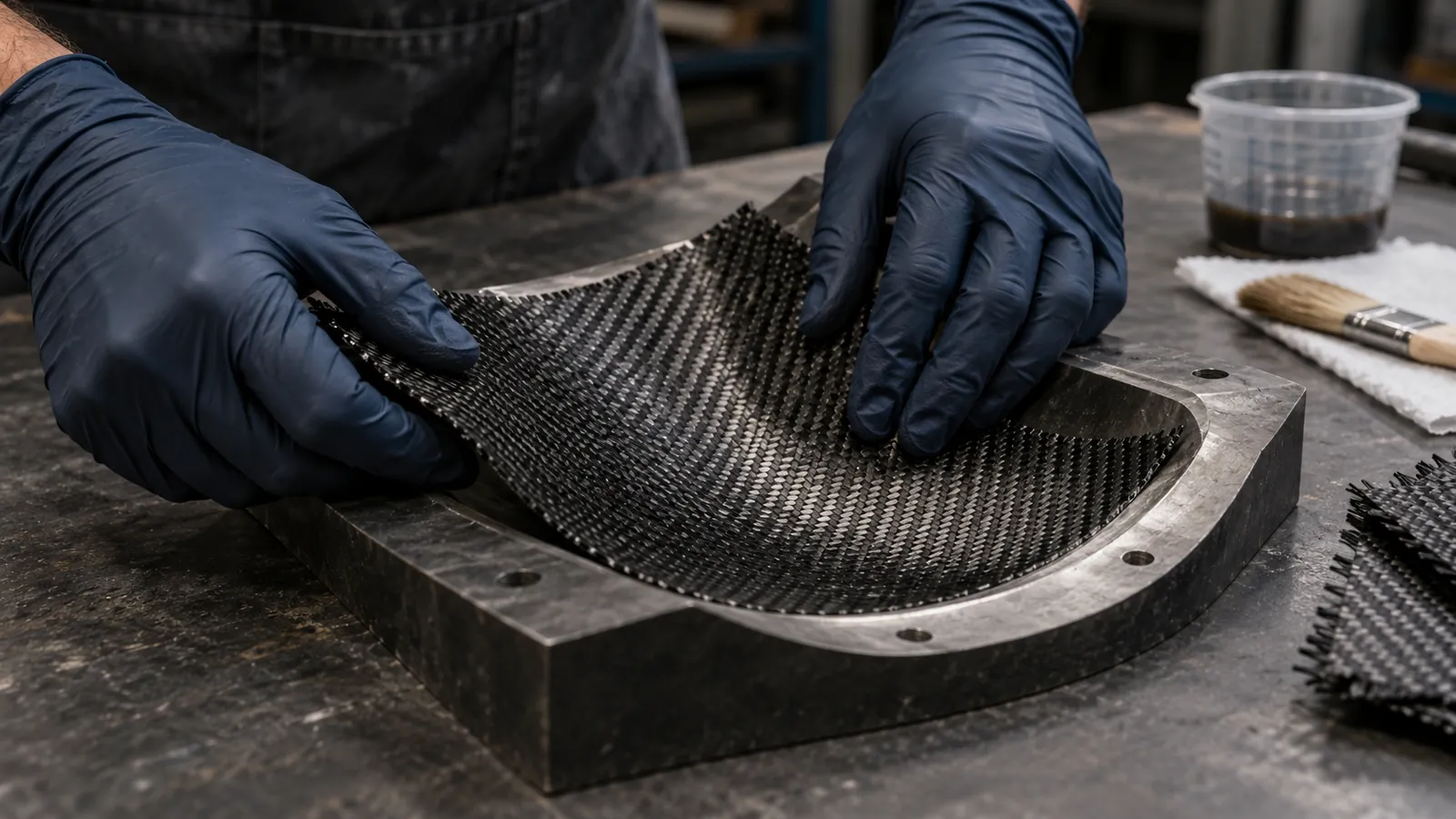
The capabilities of an unmanned system are largely determined at the airframe level. The airframe geometry, the location of the payload, the energy architecture, the available volume, the aerodynamic design and the layout of the power plant determine the limits of further development of the complex.
Therefore, AERIS platforms are designed taking into account the full set of requirements for the future system. The layout provides for the placement of sensors, computing equipment, power modules and specialized payloads already at an early stage of development.
For what tasks are AERIS platforms created?
Our own developments are focused on scenarios where a combination of several specialized characteristics in one device is required.
- autonomous research and observation missions;
- work with specialized sensing or measurement payloads;
- operation from limited areas;
- long or energetically demanding flight profiles;
- testing new onboard technologies;
- specialized tasks that require deep integration of hardware and software.
Platform architecture
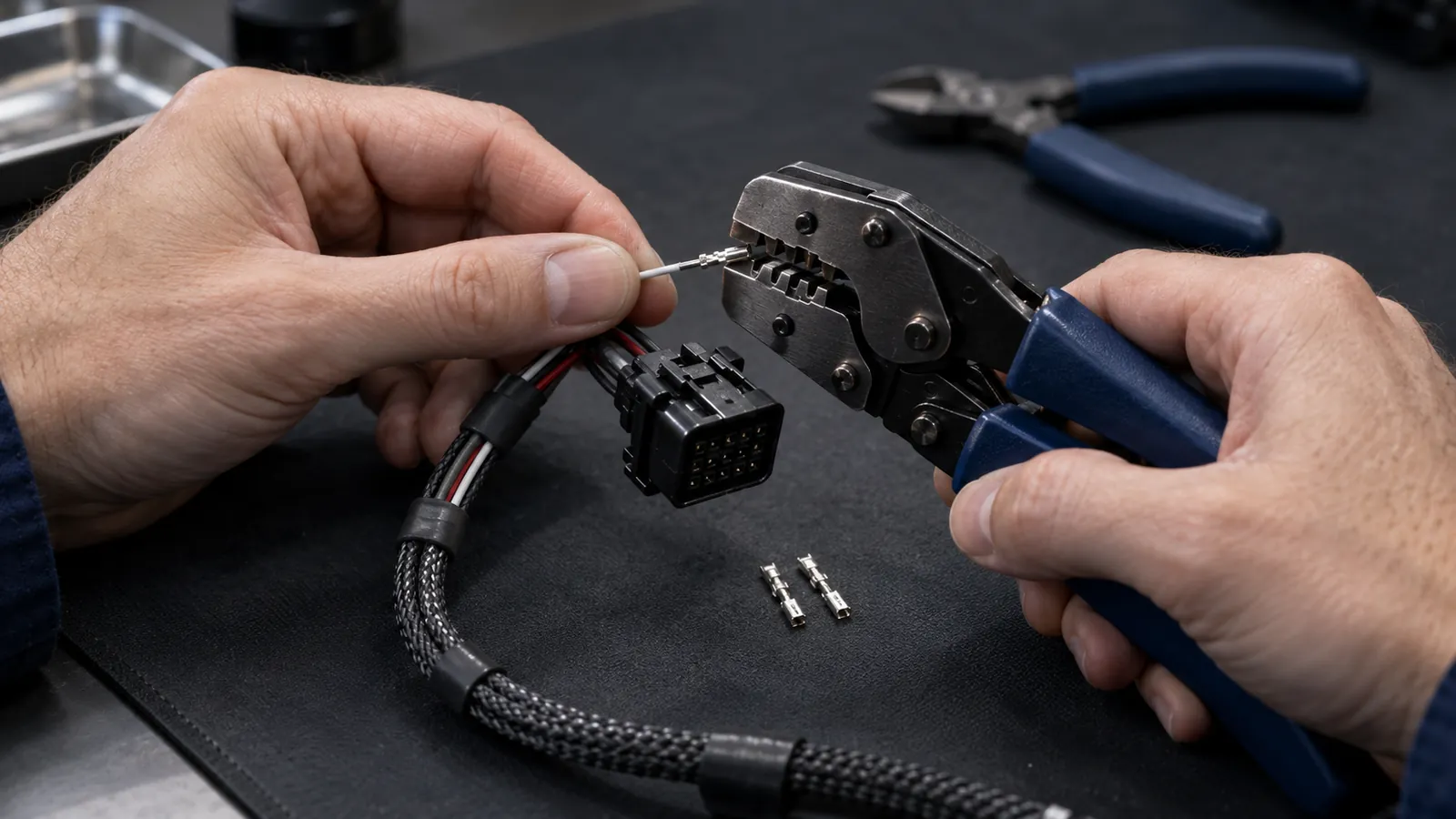
The internal layout is formed as a single system. The airframe, power, propulsion system, computational circuit and payload are designed taking into account the interaction with weight, centre of gravity and cooling, power supply and operating conditions.
A modular principle is used for a number of platforms. It allows you to change the composition of sensors, computing equipment and mission modules within the limits of the architecture provided by the design.
The external geometry is driven by aerodynamics and functional integration. The main components are located inside the housing or in specially formed volumes, which allows you to maintain a clean surface and minimize external elements.
AERIS technological base
Proprietary platforms are used to develop and test AERIS technologies in real flight conditions. As the computational, bench and flight stages progress, individual solutions move from the research program to specific configurations.
This allows the platform to be developed along with its onboard systems and test results to be taken into account directly in subsequent design iterations.
Configuration for the task
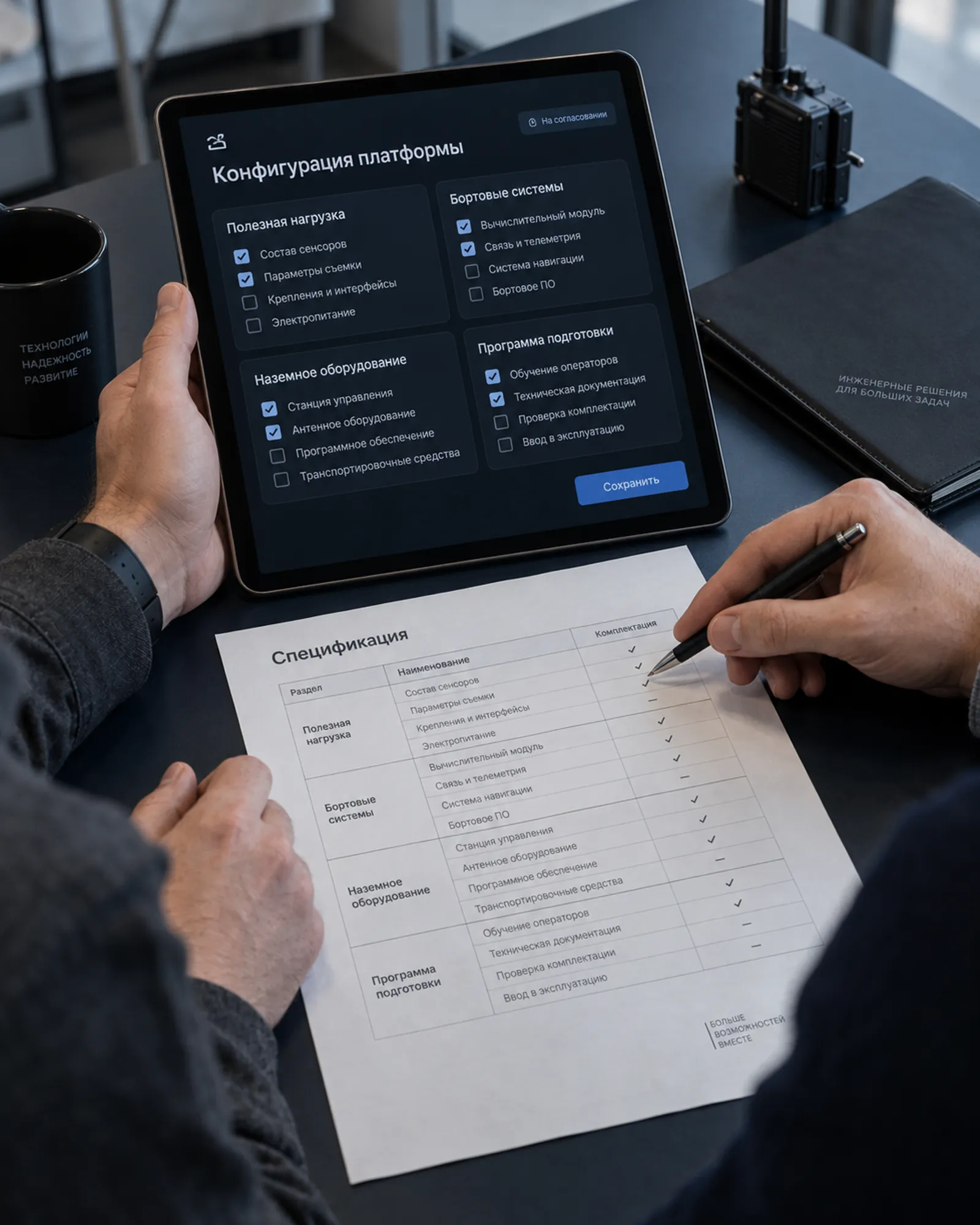
Before the delivery is formed, the purpose of the device, mission profile, payload requirements, operating duration, launch and landing conditions, required computing resources and operating limitations are determined.
After this, the configuration of a specific platform is agreed upon:
- mission payload;
- sensor configuration;
- onboard computing modules;
- communication and telemetry channels;
- energy configuration;
- software;
- ground equipment;
- operational equipment.
Limited contract supply
AERIS platforms are at different stages of technological readiness and are not produced as mass-produced products.
The possibility of delivery is determined for each development separately. The composition of the product, permissible configuration, test program, technical support and transfer conditions are fixed in the contract.
This format allows the platform to be transferred to the customer in a configuration corresponding to the actual stage of its development and the agreed application scenario.
Preparing an individual aircraft
Before handing over the platform, its technical configuration is formed, the composition of the equipment is checked and the necessary preparation program is carried out.
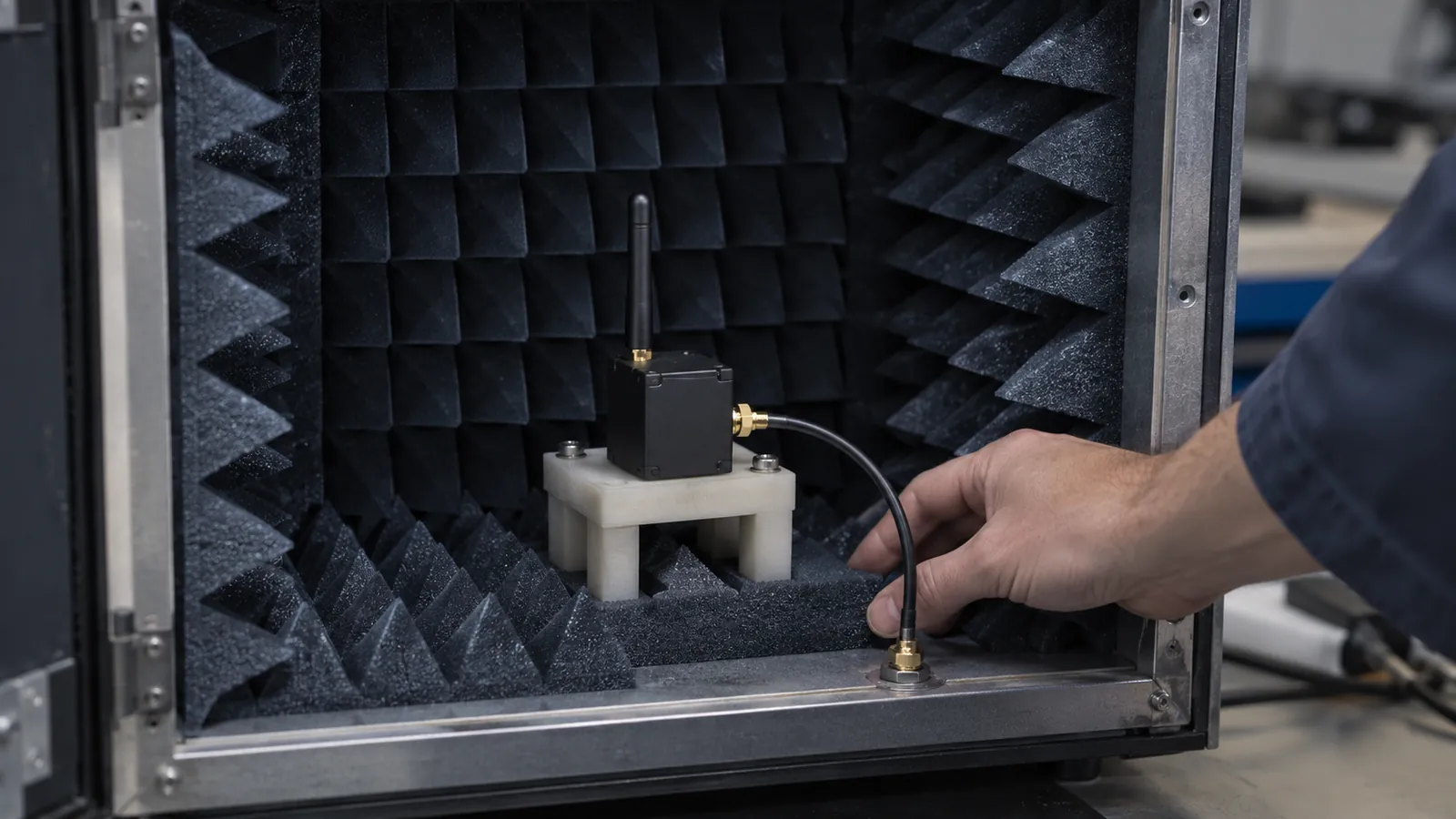
Depending on the project, this may include ground checks, avionics setup, payload verification, software configuration monitoring and test flights.
The scope of testing and documentation is determined by the purpose of the specific platform and the terms of the contract.
Further development
The contract platform can be developed after transfer to the customer. If appropriate tasks are available, AERIS performs software updates, integration of new sensors and payloads, modernization of individual modules and technical support.
Thanks to this, one basic architecture can be used in several specialized configurations without developing a new device for each individual task.
The AERIS approach
Our platforms are developed around the operational task and technological requirements for the system. Their architecture is formed simultaneously at the level of aerodynamics, structure, electronics, payload and software.
This approach allows the development of devices in which new technologies become part of the original design and are tested as part of a complete flight platform.