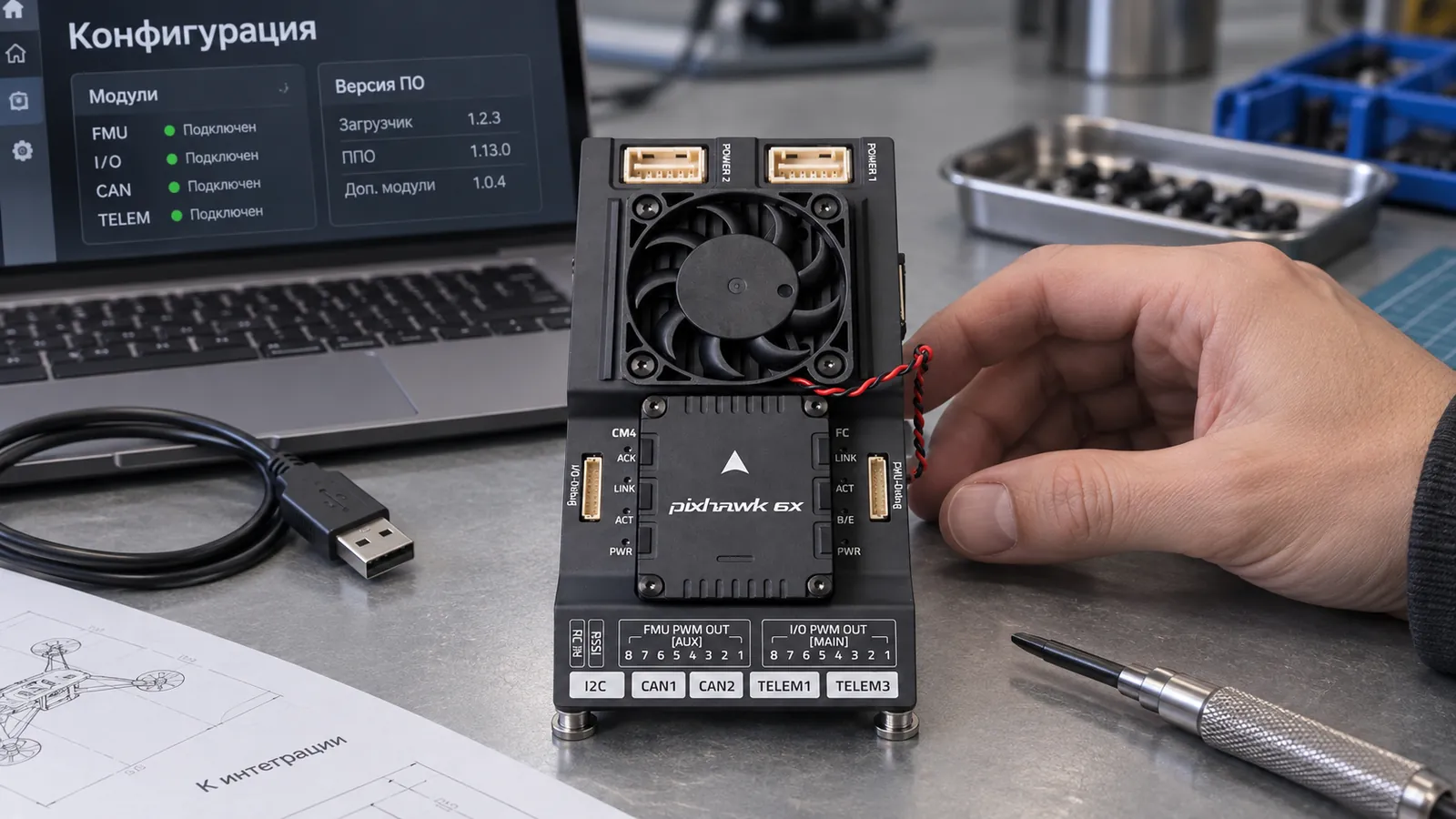
Technical support determines how consistently an unmanned aircraft system maintains its performance after being put into operation. The state of batteries, drives, sensors, computing equipment, communication lines and software configuration gradually changes, and the system itself can receive new tasks and equipment.
AERIS supports the supplied UAS throughout its operational life: performs diagnostics, maintenance, analyzes operation logs, controls software versions and, if necessary, develops the configuration of the complex.
Technical condition monitoring
Maintenance begins with recording the current state of the system and its operational configuration. This allows you to track changes in equipment, software and parameters that affect the reliability of the complex.
Depending on the type of UAS, the following are monitored:
- condition of the airframe and structural members;
- propulsion system and actuators;
- batteries and power supply circuits;
- autopilot and navigation equipment;
- sensors and payload;
- onboard computing modules;
- communication and telemetry channels;
- ground equipment;
- software and parametric configuration.
Troubleshooting
In case of abnormalities in operation, symptoms, error conditions and data available from system logs are analyzed. The cause of the malfunction may be at the level of hardware, power, communications, software, settings, or the interaction of several subsystems.
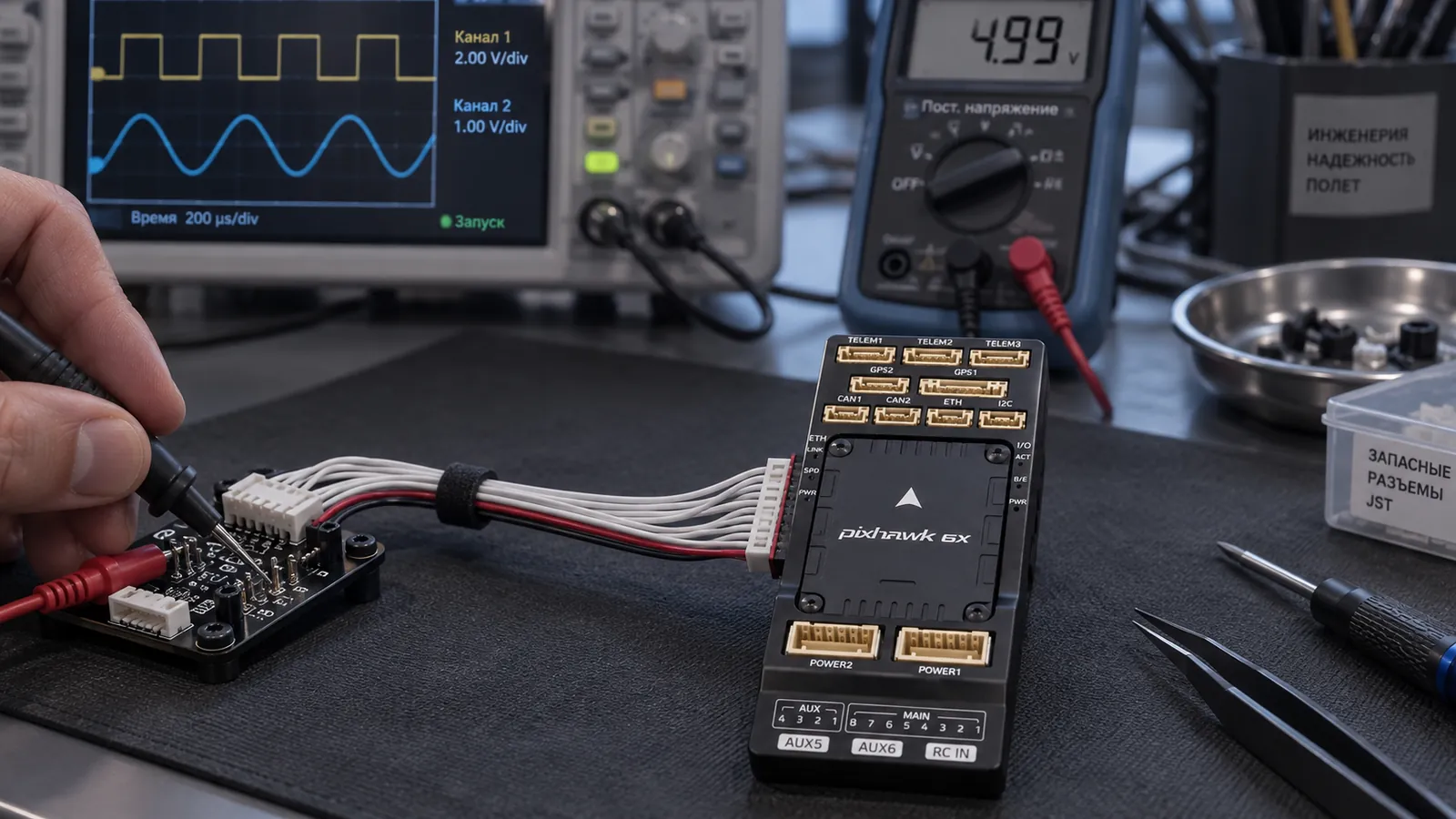
Diagnostics may include testing equipment on the bench, analyzing telemetry and logs, monitoring electrical parameters, reproducing the problem mode and comparing with the reference configuration.
Based on the results, the scope of necessary work is determined: setup, repair, component replacement, software update or additional system check.
Routine maintenance
Periodic maintenance reduces the likelihood of defects accumulating and allows changes to be detected before they affect flight missions.
The maintenance schedule depends on the design of the specific platform, the intensity of operation and the requirements of the equipment manufacturer.
Work may include:
- visual and instrumental control of components;
- checking fasteners and mechanical connections;
- propulsion control;
- checking batteries and power equipment;
- checking sensors and payload;
- control of onboard connections and interfaces;
- checking ground equipment;
- updating operational information on the system.
Flight log analysis
Logs allow you to evaluate system performance based on actual operating data. The analysis can be performed after an error occurs, after a complex mission, or periodically as part of technical support.
Depending on the available data, flight parameters, power status, actuator operation, navigation quality, communications, software component errors and payload events are considered.
Accumulated operational history helps identify recurring anomalies, assess component condition changes, and more accurately plan maintenance.
Software configuration
Firmware versions, onboard services, ground applications and system parameters must match the specific UAS hardware configuration.
As part of maintenance, AERIS can monitor installed versions, perform agreed upon updates, save configuration data, and verify system operation after changes are made.
For systems with AERIS-developed software, maintenance may also include correction of identified errors and development of previously implemented functions.
Spare parts and operational reserve
The composition of spare parts is determined by the criticality of the components, the intensity of operation and the availability of equipment. For regularly used UAS, a list of elements is generated in advance, the presence of which allows to reduce the system recovery time.
This may include:
- consumables;
- batteries and charging equipment;
- drives and elements of the propulsion system;
- sensors and interface modules;
- housing and fastening elements;
- cables, connectors and adapter components;
- specialized elements of a specific payload.
Recovery after a failure
After repair or replacement of equipment, the system is tested to the extent that it corresponds to the work performed.
Power, communications, actuators, sensors, communications, and software configuration can be monitored. For changes that affect the operation of the device in the air, sequential ground and flight checks are additionally provided.
Changing the composition of equipment
During operation, requirements for UAS may change. A new payload appears, a different communication channel, additional computing resource or a change in the composition of ground equipment is required.
AERIS evaluates the impact of such changes on the existing configuration and determines the required scope of upgrades.
If a change affects several subsystems and requires reworking the architecture of the complex, further work is carried out as part of the UAS system integration.
Development of software functions
Operations often create requirements that cannot be fully determined before the actual operation of the system begins. Real-life missions show the need for additional diagnostic tools, new payload modes, interface changes or automation of individual operations.
Such tasks may be included in the development program of the delivered system. Significant development of new software components is carried out within the framework of the “Software Development for UAS” direction.
Personnel training
Technical support may include training of customer specialists for the operation of a specific complex.
Content is determined by system configuration and may include:
- preparing the UAS for operation;
- checking the condition before use;
- work with ground equipment;
- basic diagnostics;
- maintaining operational information;
- procedure for detecting a malfunction;
- rules for handling payloads and replaceable modules.
Documenting the configuration
For the supported system, the current composition of equipment and software components is recorded. When upgrading or replacing components, the information is updated taking into account the actual installed configuration.
This history allows you to understand what changes were made to a particular UAS instance, what checks were performed, and what components require attention during subsequent maintenance.
Support formats
The amount of support is determined by the intensity of operation and the complexity of the system. One-time technical work, support of individual stages of operation or long-term maintenance of the complex are possible.
For each project, the scope of work, the procedure for addressing technical issues, the list of equipment to be serviced, and the conditions for diagnostics or modernization are agreed upon.
The AERIS approach
Technical support is based on the history of a specific UAS configuration. The condition of the equipment, software versions, work performed and diagnostic results are considered in a single operational context.
This order allows you to plan maintenance based on the actual state of the system, maintain configuration reproducibility, and consistently develop the complex as new requirements arise.