



Featured article
GNSS-denied navigation combines inertial sensors, vision, lidar, maps and state-estimation algorithms.
In this article

A one-time demonstration flight and regular operation of a UAS are different tasks. In regular operation, repeatability, technical readiness, trained crew, battery accounting, maintenance, data storage and clear criteria for a successful mission are important.
If these processes are not configured, even a good system quickly turns into a collection of disparate equipment. AERIS views operations as part of an engineering project, from site preparation to post-departure analysis.
First you need to determine what exactly will be repeated: route, type of object, frequency, crew composition, payload and report format. For monitoring, this could be a weekly flight over the territory, for inspection - a series of spot missions, for testing - a regime verification program.
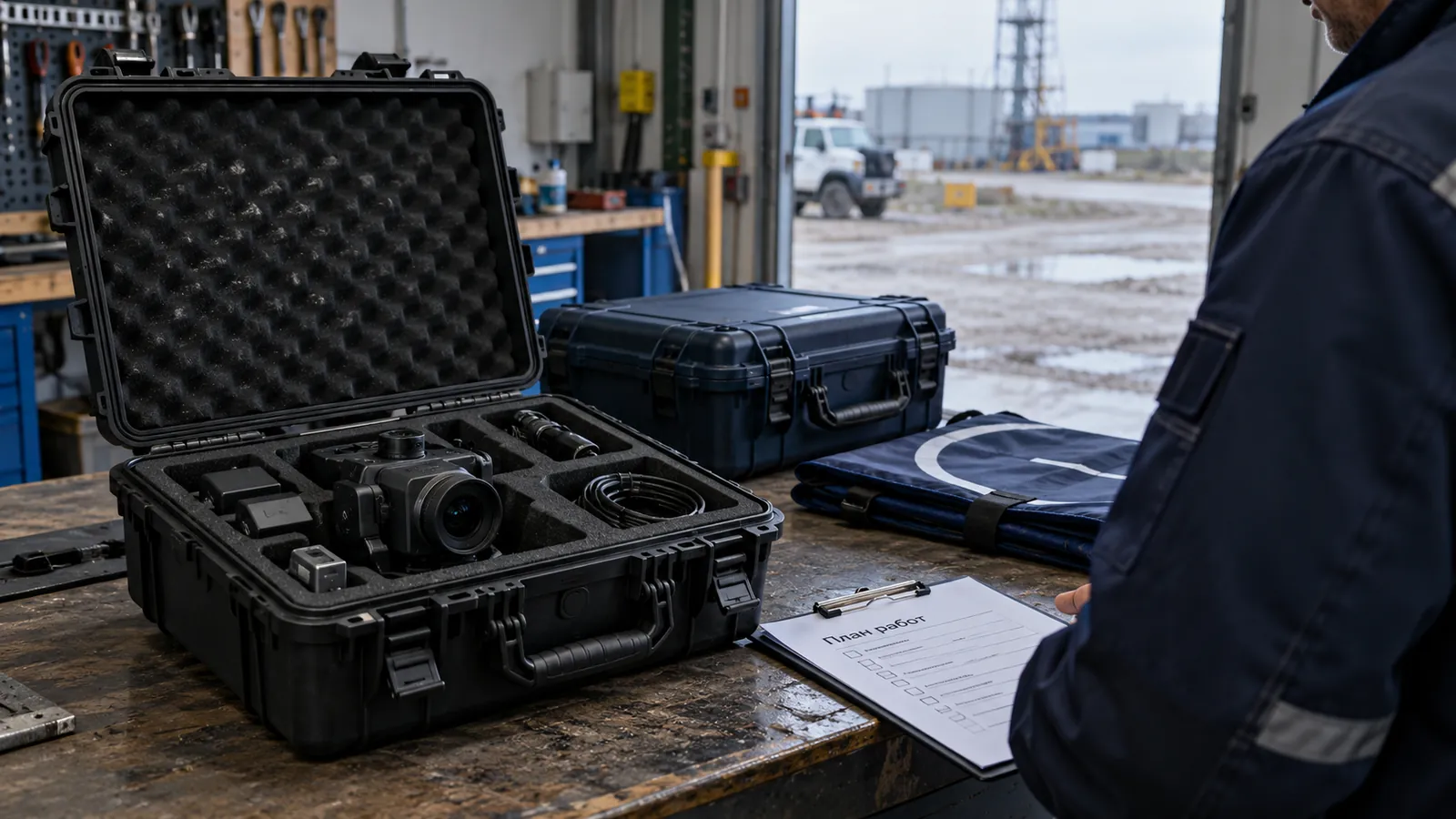
The operational architecture includes the platform, spare parts, batteries, ground station, checklists, flight logs, data storage system and software update rules.
Regular operation is limited not only by the characteristics of the device, but also by the organization of the process.
The work cycle begins before departure: preparing the route, checking equipment, charging batteries, keeping maps and firmware up to date. Control checks are performed at the site, followed by mission, data download and post-flight inspection.
After the mission, it is important not just to save the files, but to check the completeness of the data: route coverage, frame quality, telemetry, events and crew comments. This allows you to improve your next flights.
Problems most often arise from a lack of process.
Use this list as a basis for internal controls, supplemented by manufacturer documentation and project-specific rules. It does not replace the operational manual or the decision of the responsible person regarding the possibility of departure.
| Check | What should be recorded | When the issue is not closed |
|---|---|---|
| Task and roles | Scenario, those responsible for the technology, flight and data. | There are jobs for which no one is responsible. |
| Configuration | Equipment composition, software versions and date of last check. | After testing, components or settings were changed without evaluating the changes. |
| Service | Records of completed work and open comments. | There is an unsolved fault or a missing history of important work. |
| Food | Battery accounting, condition and checks according to the manufacturer’s documentation. | There is damage, an unknown condition, or an inconsistent power configuration. |
| Payload | Completeness, fastening and verification of receipt of the required data. | The sensor turns on, but the quality or completeness of the result has not been verified. |
| Venue and conditions | Access procedures, acceptable conditions and cancellation criteria. | Conditions are not assessed or exceed the agreed limits. |
| Data | Place of recording, procedure for reservation, transfer and verification of completeness. | There is no person responsible for the safety and control of materials. |
For each line, note the status, date, person responsible, and a link to the supporting record. An empty line means an open issue that needs to be resolved before the corresponding stage of work.
This set helps to discuss in detail diagnosis and support of UAS. Operations and service limitations are consistent for a specific configuration.
To ensure readiness for regular use, check:
Practical conclusion: Regular operation of UAS begins with regulations. When equipment, crew, and data all work within the same process, the system becomes a predictable tool.
Featured article
GNSS-denied navigation combines inertial sensors, vision, lidar, maps and state-estimation algorithms.
Featured article
A comparison of system rental and contracted aerial operations: teams, initial information, responsibilities and deliverables.